Your First Home scheme: Smaller 2.5% deposit, bigger moving plans?
Apparently, the secret to saving a house deposit is cancelling Netflix and never buying a coffee again – but anyone who’s actually tried saving while paying rent knows there’s a bit more to it.
You can be sensible with your money and still feel like your first home is a long way off. Especially when payday seems to involve waving hello to your wages, then immediately waving most of them goodbye.
The government’s Your First Home scheme aims to make that first hurdle more manageable, with deposits starting at 2.5%. Here’s how it works, what you need to budget for and why there’s a little more to it than the headline figure.
What is the Your First Home scheme?
The Your First Home scheme is a government-backed first-time buyer scheme in England. Eligible buyers can purchase a qualifying new-build home from a participating developer using a deposit of at least 2.5%, a 20% government equity loan and a repayment mortgage.
It’s designed to help people who would struggle to buy without support. If saving the deposit feels like the part that keeps moving the finish line, it could give you another route to consider.
How much deposit do you need?
The minimum deposit is 2.5% of the purchase price. On a £249,000 home, that’s £6,225, compared with £12,450 for a 5% deposit.
Here’s how the purchase adds up:
- Your deposit (2.5%): £6,225
- Government equity loan (20%): £49,800
- Repayment mortgage (77.5%): £192,975
- Total purchase price: £249,000
In this example, the low deposit scheme for first-time buyers reduces the deposit you need to save by £6,225. That’s a meaningful difference when you’re transferring money into savings every payday and willing the total upwards.
These figures are an illustration, rather than confirmation that a particular property or buyer qualifies. You’re putting less of your own money towards the purchase upfront, so understanding the borrowing matters just as much as reaching the savings target.
Keep a separate pot for legal fees, moving costs and other purchase expenses, too. Sadly, having excellent taste in sofas doesn’t make the conveyancing bill disappear.
How does a first-time buyer mortgage work with the scheme?
Your mortgage covers the purchase price left after your deposit and government equity loan. With a 2.5% deposit and a 20% equity loan, that means borrowing the remaining 77.5% through a repayment mortgage.
You still need to pass the lender’s affordability and credit checks (a smaller deposit requirement doesn’t automatically mean a mortgage approval).
It also helps to think beyond what a lender is prepared to offer. Your monthly budget needs room for heating, food, travel and the occasional meal that somebody else cooks.
An independent mortgage adviser can help you compare first-time buyer mortgage options and work through the costs.
Is the government equity loan interest-free?
The equity loan is interest-free for the first five years. Interest is then charged at 1.5% in year six and 3% from year seven.
Those interest payments sit alongside your mortgage payments and don’t reduce the equity loan balance. Build them into your longer-term budget so year six doesn’t arrive with an unwelcome addition to the monthly outgoings.
Do you have to repay the equity loan?
Yes, the government equity loan needs repaying. The amount is normally based on 20% of your home’s value when you repay it, so it can increase or decrease as the property’s value changes.
For example, if your home is worth £350,000 when you repay the full 20% loan, the repayment is £70,000.
The loan is usually repaid when you sell, although earlier repayment is possible. Your conveyancer can explain the legal terms before you commit.

Who is eligible for this first-time buyer scheme?
The scheme is for first-time buyers purchasing their main home in England. The household income limits are:
- £110,000 or less outside London
- £140,000 or less in London
You also need a mortgage from a participating lender and a qualifying property within the local price cap. The full list of price caps and complete eligibility rules are still to come.
Can you use this new build deposit scheme on any home?
This new build deposit scheme covers eligible new-build properties bought from participating developers in England. It doesn’t cover existing homes being resold by their owners.new-build properties
As you build your shortlist, give some thought to the everyday stuff as well as the asking price. Where does the laptop go on a working-from-home day? How easy is the commute? Is there space for friends to stay without someone drawing the short straw and sleeping beside the fridge? (The numbers need to work, but so does the home).
When does the Your First Home scheme open?
Applications are expected to open in February 2027, with the first property sales planned for April 2027. Customer pre-registration is scheduled to close by the end of December 2026.
That gives you time to get familiar with the scheme, review your budget and explore what you want from your first home.
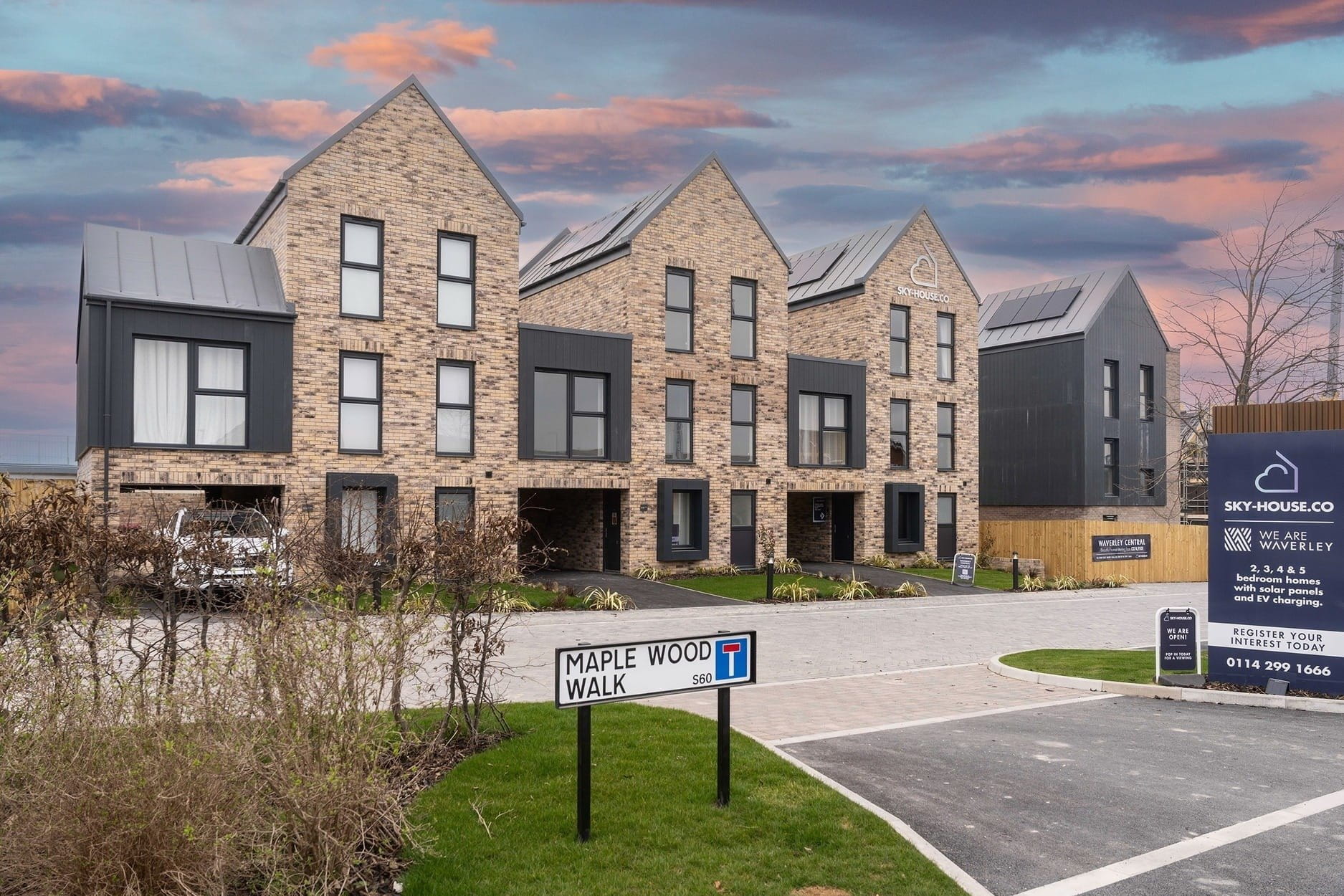
Find somewhere that feels like you
Getting onto the property ladder is a big milestone. Having somewhere you can paint, arrange and settle into exactly as you please are the parts you get to enjoy afterwards.
While you explore your buying options, come and get a feel for life at Sky-House. Look around, ask questions and picture where your everyday routines might fit. You’re welcome to mentally arrange the furniture while you’re here.
Neighbourhoods

We are proud of our neighbourhoods, which are built with care to create thriving and blossoming communities. Our homes are designed to help people live better lives.